
How to Move to Spain from the US: A Complete Process Overview

Moving to a new country is a big dream for many Americans. In recent years, more people are looking for:
- A change in lifestyle
- Better weather
- A lower cost of living
Spain is a top choice here. It offers a high quality of life and several ways to stay legally. Our guide will help you understand how to move to Spain from the US by covering everything from visas to finding a home.
Why Americans Are Choosing Spain
There are plenty of reasons to move to Spain beyond the weather, though the weather is genuinely good. Spain runs at a slower pace, and that’s the point for most people who make the move. The culture is built around time with people – food, conversation, being outside. Madrid and Barcelona have world-class art and history; Valencia and Malaga offer a more relaxed coastal feel.
Spain has low crime rates and an excellent healthcare system – far more affordable than what Americans are used to. Salaries are lower, but money goes further. When you look at the pros and cons of living in Spain, the lifestyle usually wins. Just be ready for a lot of paperwork and a slower pace at any government office.
Visa Options When Moving to Spain
To move to Spain from the USA, you need to secure the legal right to live there before you go. Here are the main visa categories for 2026:
- Digital Nomad Visa. For remote workers and freelancers. You need to show you work for companies based outside Spain and meet a minimum monthly income – around €2,849 for a single applicant in 2026.
- Non-Lucrative Visa (NLV). The most popular choice for retirees or people with solid savings. You can’t work on this visa, but you can live in Spain if you show enough passive income or bank balance.
- Work Visa. If a Spanish company hires you, they can sponsor your visa – though they first need to show that no local candidate could fill the role.
- Student Visa. If you’re enrolled in a recognized school or university, you can stay for the duration of your studies.
- Self-Employment Visa. For entrepreneurs who want to start a business in Spain. You’ll need a business plan and enough capital.
How to Move to Spain from the US
A clear plan makes this much less overwhelming. Here’s a practical step-by-step breakdown of how to move to Spain from the US:
- Choose the right visa. Look at your work situation and savings to figure out which category fits.
- Prepare financial proof. Most visas require recent bank statements. Make sure you meet the minimum income or savings level for your chosen visa type.
- Get your documents ready. You’ll need a valid passport, a clean FBI background check, and a medical certificate. These need to be apostilled and translated into Spanish by a certified traductor jurado. One thing that catches a lot of Americans off guard: the FBI background check requires a federal apostille from the US Department of State – not a state-level one – and that process alone can take 4 to 12 weeks. On top of that, Spanish consulates typically require criminal records issued within the last 90 days. Getting the timing right here is one of the most common mistakes we see in applications.
- Arrange private health insurance. For most visas, you need a private Spanish policy with no copayments and no waiting periods – a standard travel policy won’t work.
- Apply at the consulate. Submit your application to the Spanish consulate that covers your home state.
- Arrive and get your TIE. Once in Spain, you have 30 days to apply for your physical residence card.
- Register locally. Go to your local town hall to register your address (padrón) – you’ll need this for almost everything else.
Cost of Living and Financial Planning
The cost of living in Spain vs USA is one of the biggest surprises for people who make the move. On average, day-to-day life in Spain costs roughly 30-50% less than in the US, particularly for housing and healthcare.
- Housing. A nice apartment in Valencia might run €1,100 a month. A similar place in a US city could easily be double that.
- Groceries. Fresh food – produce, bread, good wine – is genuinely affordable. You’ll spend noticeably less than you’re used to.
- Healthcare. Private insurance in Spain often costs under €100 a month for full coverage. One thing many retirees don’t realize until it’s too late: Medicare does not cover healthcare in Spain. Even if you’re fully enrolled back home, you’ll need a Spanish private policy from day one.
- Transport. Most Spanish cities have excellent public transit. A lot of people never need a car.
Keep in mind that Madrid and Barcelona are more expensive than smaller towns or regional cities. Budget for the first few months: deposits, insurance setup, and admin fees all hit at once.
One more thing that’s specific to Americans and often overlooked: the US taxes are based on citizenship, not residency. That means you’ll likely need to keep filing US tax returns even after you become a Spanish tax resident. There is a US-Spain tax treaty, but double taxation can still happen – particularly if you have an LLC, retirement accounts, or investment portfolios. Getting cross-border tax advice before you move, not after, saves a lot of headaches.
What Life Is Really Like After You Move
Living in Spain as an expat is genuinely enjoyable, but it takes some adjustment. The biggest practical hurdle for most Americans is the language. Tourist areas have plenty of English speakers, but banking, medical appointments, and most official tasks happen in Spanish.
Banking is worth a specific mention: Americans run into more friction here than people from other countries. Because of FATCA reporting requirements, some Spanish banks are reluctant to open accounts for US citizens, and others will ask for additional compliance documents like a W-9. Going with a larger bank and having your US tax paperwork organized in advance makes this process noticeably smoother.
The daily schedule is different, too. Many shops close for a few hours in the afternoon. Dinner doesn’t usually happen before 9 pm. Life happens outdoors – people gather in plazas and on terraces late into the evening in a way that most Americans aren’t used to.
Living in Spain as an expat also means adapting to a system that doesn’t rush. Government offices move slowly, and appointments take time. But once you’re settled, healthcare is easy to access, the education system is solid, and daily life tends to feel calmer than before.
Pros and Cons to Consider Before Relocating
Here’s an honest summary of the pros and cons of living in Spain before you make the decision:
Pros:
- Strong focus on family, food, and quality time
- Safe cities with low violent crime
- Access to one of the best healthcare systems in the world
- Plenty of sunshine and mild winters in most regions
Cons:
- Bureaucracy is slow and can be genuinely frustrating
- Local salaries are much lower than in the US
- You need to commit to learning Spanish to really integrate
- Things don’t always happen quickly – a hard adjustment for Americans used to fast service
Final Checklist Before Relocating
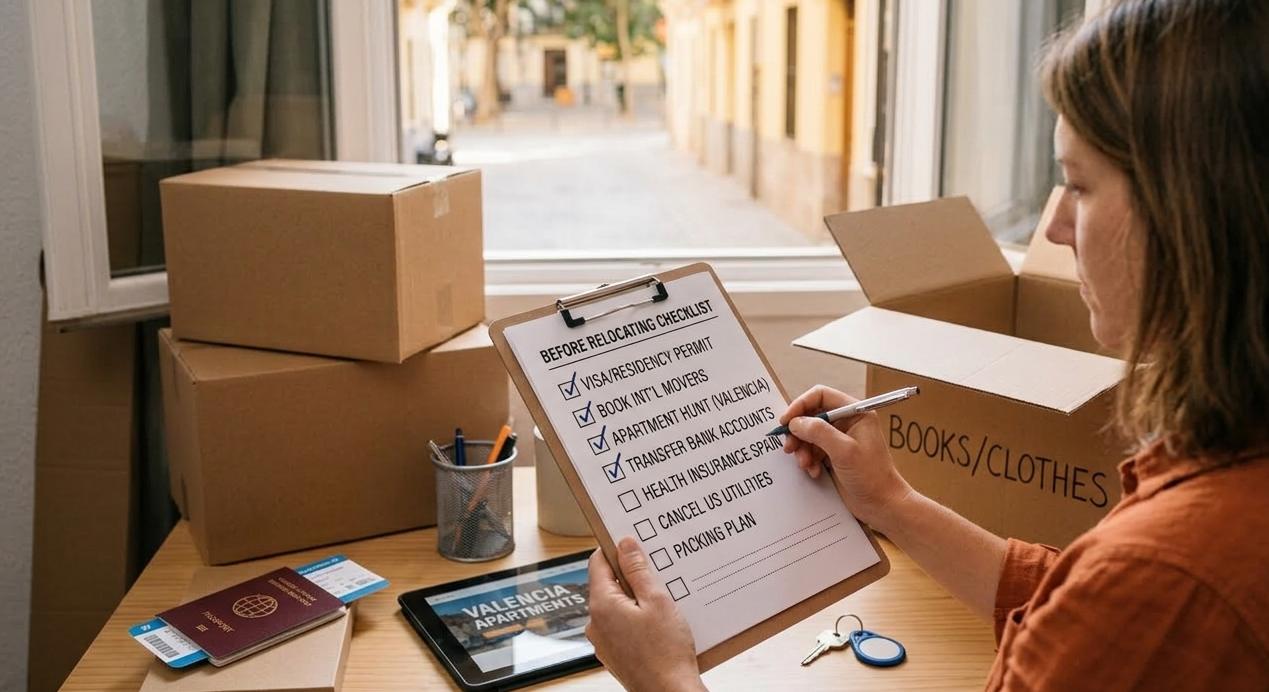
Quick checklist:
- Visa secured – physical visa sticker in your passport
- Financial proof ready – bank statements and income documentation
- Health insurance active – Spanish private policy with no copayments
- Documents translated and apostilled
- FBI background check apostille started early – federal processing can take 4-12 weeks
- Housing arranged for at least the first month
- Timeline set – flight date confirmed, consulate window noted
- US tax situation reviewed, especially if you have an LLC, IRA, or investment accounts
If you’re planning to move to Spain from the USA and want guidance through the visa process, Atlex Legal has helped hundreds of Americans make this move successfully. Book a consultation. We’ll help you figure out the right path for your situation.
FAQ
How long does it take to move to Spain from the US?
The process usually takes 4 to 6 months – gathering documents, getting them translated, and waiting for consulate approval. For Americans, the federal apostille on the FBI background check is often the longest single step, so start that as early as possible.
Can I work remotely for a US company while living in Spain?
Yes. The Digital Nomad Visa is designed for exactly this. You’ll need to prove your employment and meet the minimum income requirement.
Do I need to speak Spanish before moving?
It’s not required for the visa, but it makes life a lot easier. Even basic Spanish helps with housing, daily errands, and official matters.
Is healthcare accessible for Americans?
Yes. You’ll start with private insurance for your visa. Once you’re a permanent resident or paying into the social security system, you can access the public healthcare system. If you’re retiring to Spain, keep in mind that Medicare does not provide coverage outside the US – you’ll need separate Spanish private insurance regardless of your age.
Is Spain cheaper than the US overall?
Generally, yes. Most expats find their monthly expenses drop significantly – especially for rent, food, and healthcare.
Do Americans still need to pay US taxes while living in Spain?
Yes, this is one of the biggest differences between Americans and other expats. The US taxes are based on citizenship, so you’ll continue filing US returns even as a Spanish resident. The US-Spain tax treaty helps, but it doesn’t eliminate all overlap. This is especially important if you have self-employment income, an LLC, or retirement accounts. We always recommend getting cross-border tax advice before relocating.